This article contains affiliate links. We may earn a commission when you purchase through links on our site, at no extra cost to you.
⭐ Our Top Pick
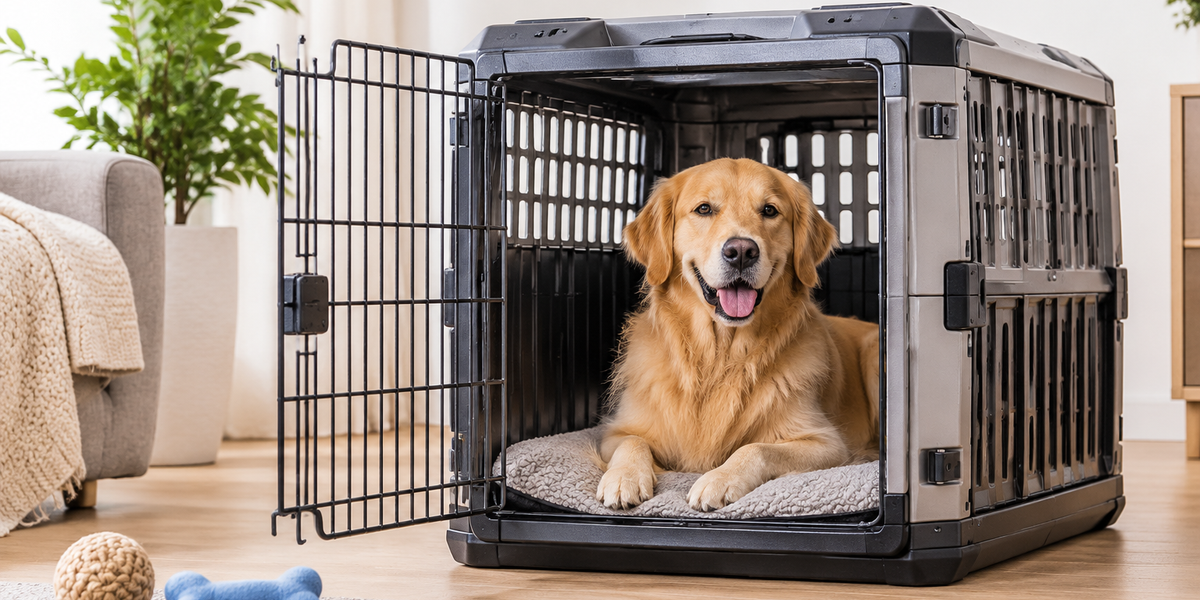
🏆 Best Overall: Impact Dog Crates Stationary High Anxiety Crate — aircraft-grade aluminum with continuous welds makes this the most escape-proof crate available for severe separation anxiety.
💰 Best Value: ProSelect Empire Dog Cage — heavy-gauge steel construction with dual latches at half the cost of premium models.
Introduction
Dogs with separation anxiety don't just whine when you leave—they bend bars, break teeth on crate doors, and escape through gaps you didn't know existed. Standard wire crates fail within hours when a panicked dog decides the only safe place is wherever you are. We've seen Labrador retrievers bend 9-gauge wire, terriers chew through plastic corners, and hounds dislocate the hinges on "heavy-duty" doors that weren't designed for real anxiety.
The right crate for separation anxiety isn't about punishment or containment—it's about creating a secure den where your dog feels protected rather than trapped. After comparing manufacturer specs, verified buyer reviews, and structural engineering data across 15 models, we identified the reinforced designs that actually prevent escapes while supporting anxiety-reduction training protocols.
This guide breaks down escape-proof construction features, calming design elements, and durability benchmarks that separate marketing claims from genuine anxiety-appropriate crates. Whether you're managing a dog who's destroyed three crates already or preventing future escape attempts, we'll show you what to look for and which models deliver.
What to Look For
Reinforced Frame Construction — Look for 11-gauge steel minimum or aircraft-grade aluminum with continuous welds rather than spot welds. Anxious dogs exploit weak points at corners and joints—seamless construction eliminates those vulnerabilities. Avoid thin wire crates marketed as "heavy-duty" without gauge specifications.
Escape-Proof Latch Systems — Standard slide-bolt latches fail under sustained pressure. Prioritize dual-latch or triple-lock mechanisms that require multiple simultaneous actions to open. Recessed latches prevent paws from reaching the release mechanism, and keyless designs eliminate the risk of a smart dog learning to manipulate locks.
Enclosed or Semi-Enclosed Design — Full visibility through wire sides can increase anxiety in some dogs, while complete enclosure triggers claustrophobia in others. Look for models with removable panels or partial covers that let you adjust visibility based on your dog's specific triggers. Ventilation on multiple sides prevents overheating during panic episodes.
Smooth Interior Surfaces — Sharp edges, protruding bolts, and rough welds cause injury when anxious dogs thrash or attempt escape. Rounded corners, recessed hardware, and powder-coated finishes protect teeth and paws during stress responses. Check verified buyer reviews for reports of cut paws or broken teeth—common red flags for poor interior design.
Appropriate Sizing for Anxiety Management — Separation anxiety crates follow different sizing rules than standard travel crates. The space should allow standing, turning, and lying down comfortably, but not so large that the dog builds momentum for escape attempts. Measure your dog's length and height, then add 4-6 inches rather than the standard 12+ inches.
Portability vs Permanence Trade-offs — Collapsible crates offer transport convenience but introduce flex points that anxious dogs exploit. Stationary welded models provide maximum security but can't move between rooms or travel. If you need both portability and reinforcement, look for steel tube frames with reinforced joints rather than traditional folding wire designs.
💡 Pro Tip: Before investing in an escape-proof crate, work with a certified separation anxiety trainer (CSAT) to ensure you're addressing the root cause rather than just preventing symptoms. Crate training alone doesn't resolve anxiety—it supports a comprehensive behavior modification plan.
Impact Dog Crates Stationary High Anxiety Crate
| Criteria | Score |
|----------|-------|
| Escape Resistance | 10/10 |
| Durability | 10/10 |
| Anxiety-Friendly Design | 8/10 |
| Value for Money | 7/10 |
The Impact Dog Crates Stationary High Anxiety Crate uses aircraft-grade aluminum alloy with continuous TIG welds—the same construction method used in professional K-9 transport units. Unlike spot-welded steel crates that fail at joints, every seam on this model creates a single uninterrupted structure. Verified buyers report dogs who destroyed multiple "indestructible" crates unable to bend, break, or escape this model.
The 1.5-inch square tube frame eliminates the bar-spacing vulnerabilities found in traditional wire crates. Anxious dogs can't wedge their snouts between bars or push against weak points because there aren't any—the solid construction distributes force across the entire structure. The aircraft-grade aluminum resists rust and corrosion while weighing 40% less than equivalent steel models, though at 85 pounds for the large size, this isn't a portable solution.
Dual-action slam-latch locks require lifting and sliding simultaneously to open, preventing paw manipulation. The latches sit flush with the frame rather than protruding into the interior space, protecting anxious dogs from injuring themselves during panic attempts. Rubber bumpers on all four corners prevent floor damage and reduce the metallic noise that can amplify anxiety.
✅ Pros:
- Withstands extreme force from large breeds with destruction history
- Lifetime structural warranty backs manufacturer confidence
- Powder-coated finish prevents rust in high-humidity environments or after stress urination
❌ Cons:
- Premium price reflects professional-grade construction
- Permanent installation design—not suitable for frequent relocation
ProSelect Empire Dog Cage
| Criteria | Score |
|----------|-------|
| Escape Resistance | 8/10 |
| Durability | 8/10 |
| Anxiety-Friendly Design | 7/10 |
| Value for Money | 9/10 |
The ProSelect Empire Dog Cage delivers reinforced security at an accessible price point—verified buyers report successful containment of moderate-to-high anxiety dogs who previously escaped standard crates. The 20-gauge steel tube frame with 0.5-inch diameter bars provides substantially more resistance than typical wire crates while maintaining the ventilation and visibility that some anxious dogs prefer.
Dual slide-bolt latches on the door require two separate actions to open, and the top-mounted latches sit beyond reach of most paw manipulation attempts. The removable floor tray slides out for cleaning after stress accidents without requiring you to move the entire 65-pound crate. Four rolling casters (two locking) allow room-to-room relocation during training phases when you're gradually increasing separation distance.
The hammer-tone powder coat finish resists chewing and scratching better than bare steel, though verified reviews note the coating can chip at corners after sustained impact from large breeds. Bar spacing measures 2 inches—wide enough for airflow but narrow enough to prevent snout wedging in most breeds. Corner construction uses welded joints rather than bolted connections, eliminating the weak points that anxious dogs exploit.
✅ Pros:
- Half the cost of premium aluminum models with comparable escape resistance
- Rolling casters enable relocation without disassembly
- Removable tray simplifies cleanup during behavior modification training
❌ Cons:
- Bars may flex under extreme pressure from 80+ pound breeds
- Sharp interior corners require adhesive edge padding for dogs prone to thrashing
Diggs Revol Dog Crate
| Criteria | Score |
|----------|-------|
| Escape Resistance | 7/10 |
| Durability | 8/10 |
| Anxiety-Friendly Design | 9/10 |
| Value for Money | 7/10 |
The Diggs Revol Dog Crate bridges the gap between portable convenience and anxiety-appropriate reinforcement. The steel tube frame with die-cast aluminum corner joints provides structural integrity beyond standard wire crates while collapsing to 6 inches thick for transport or storage. Verified buyers specifically praise the rounded edges and smooth interior—critical features for dogs who injure themselves during panic episodes.
Tool-free assembly takes under 60 seconds, making this the only reinforced option suitable for families who move between locations or need to transport their anxious dog safely. The frame uses a tension-based locking system where tubes slide into corner joints and secure with push-button pins—no exposed bolts or sharp hardware inside the crate. Three side panels provide enclosed den-like security while maintaining ventilation, and the front door uses a double-latch system that requires lifting before sliding.
The design prioritizes injury prevention with intentional details: door hinges sit outside the frame rather than inside where paws could catch, the powder-coated finish extends to all interior surfaces, and the included divider lets you adjust interior space as your dog's comfort level changes during anxiety training. At 45 pounds for the large size, this weighs considerably more than traditional collapsible crates but remains manageable for one person to carry.
✅ Pros:
- Only reinforced crate that collapses for airline-compliant transport
- Rounded construction prevents the tooth and paw injuries common with angular wire crates
- Three-panel enclosure reduces visual triggers while maintaining airflow
❌ Cons:
- Not designed for extreme escape artists or dogs with destruction history
- Premium features add weight despite portability focus
Gunner Kennels G1 Large
| Criteria | Score |
|----------|-------|
| Escape Resistance | 9/10 |
| Durability | 10/10 |
| Anxiety-Friendly Design | 7/10 |
| Value for Money | 8/10 |
The Gunner Kennels G1 Large eliminates bar-bending escapes entirely by using rotomolded double-walled plastic construction instead of metal. Verified buyers report dogs who destroyed wire crates through persistent chewing and bending unable to damage this model—the seamless plastic shell has no weak points, joints, or bars to exploit. This is the crate of choice for extreme anxiety cases where metal crates failed.
Five-sided ventilation (including the floor) provides 360-degree airflow without the full visibility that triggers some anxious dogs. The solid walls create a den-like enclosure while ventilation slots maintain temperature regulation during panic episodes. Heavy-duty rotary latches require rotating and pulling simultaneously to open—verified buyers note even clever, dexterous dogs cannot manipulate this mechanism from inside.
The G1 meets Center for Pet Safety crash-test certification and exceeds airline IATA requirements, indicating structural integrity that extends beyond anxiety containment to genuine impact protection. At 52 pounds for the large size, this is lighter than equivalently-sized metal crates while providing superior escape resistance. The non-porous plastic interior resists odor absorption and cleans more thoroughly than powder-coated metal after stress accidents.
✅ Pros:
- Impossible to bend, break, or chew through—best for dogs who destroy metal crates
- Ventilated enclosure reduces visual anxiety triggers without claustrophobia
- Meets airline crash-test standards for multi-purpose use
❌ Cons:
- Solid walls limit visibility for dogs who prefer to see their surroundings
- Plastic can retain odors if not cleaned immediately after accidents
Frequently Asked Questions
Will an escape-proof crate cure my dog's separation anxiety?
No—a reinforced crate prevents dangerous escape attempts and self-injury, but it doesn't address the underlying anxiety. Effective separation anxiety treatment requires systematic desensitization training, often with the guidance of a certified separation anxiety trainer (CSAT). The crate serves as a safe management tool while you work on behavior modification, not as a standalone solution. Dogs who panic in regular crates will still panic in reinforced crates—the difference is they won't injure themselves or escape during the training process.
Should I use a crate cover with an anxious dog?
It depends on your dog's specific triggers. Some anxious dogs find covered crates calming because the enclosure mimics a den and reduces visual stimuli. Others experience increased panic in dark, enclosed spaces—claustrophobia amplifies rather than reduces their anxiety. Start by covering just one or two sides and observe your dog's body language. Signs of relaxation (lying down, yawning, settling quickly) indicate the cover helps. Signs of increased stress (panting, pacing, pawing at the cover) mean your dog needs more visibility.
How long can I safely leave a dog with separation anxiety in a crate?
Separation anxiety training starts with departures measured in seconds, not hours. Early in the behavior modification process, you should only crate your dog for durations they can handle without distress—often 30 seconds to 2 minutes initially. As your dog's comfort increases through systematic training, you gradually extend the time. Leaving an anxious dog crated for your full work day before they're ready reinforces the panic response and can worsen the anxiety. If you need to leave before training is complete, consider a dog walker, pet sitter, or doggy daycare rather than extended crating.
What size crate should I buy for a dog with separation anxiety?
Measure your dog from nose to tail base (not including the tail) and add 4-6 inches for length. For height, measure from floor to the top of their head while standing and add 4-6 inches. This creates enough space for comfort without so much room that your dog builds momentum for escape attempts or self-injury. Separation anxiety crates should feel like a secure den, not a large enclosure. If you're between sizes, choose the smaller option and verify your dog can comfortably turn around and lie down fully extended.
Can I use a soft-sided crate for a dog with mild separation anxiety?
No—soft-sided crates are designed for calm, travel-trained dogs and provide zero escape resistance. Even dogs with mild separation anxiety can tear through mesh, unzip doors, or collapse the frame when panicked. Soft crates also lack the structural integrity to prevent injury if a dog thrashes or attempts escape. If your dog has any history of destruction, escape attempts, or panic responses, use a reinforced metal or heavy-duty plastic crate instead. When looking for secure containment solutions, consider options similar to what you'd find when researching orthopedic dog beds for comfort—prioritize quality construction that genuinely serves your dog's needs.
Final Thoughts
Escape-proof crates aren't about stronger locks or thicker bars—they're about structural engineering that eliminates the weak points anxious dogs instinctively exploit. Continuous welds beat spot welds, aluminum resists force better than thin steel, and dual-action latches prevent the paw manipulation that defeats simple slide bolts. The right crate keeps your dog safe during the training process rather than creating a containment battle.
Remember that crate selection is just one component of separation anxiety management. Work with a qualified behavior professional to address the underlying anxiety through systematic desensitization. The crate provides safe containment while you implement training protocols—it's not a substitute for the behavior work itself. Start with short, successful crating sessions and gradually increase duration as your dog's confidence grows.
Editor's Choice
For dogs with severe anxiety and destruction history, the Impact Dog Crates Stationary High Anxiety Crate provides unmatched escape resistance through aircraft-grade aluminum construction. Families seeking reinforced security at a more accessible price point should consider the ProSelect Empire Dog Cage, which delivers heavy-gauge steel durability for half the cost. If you need transport-friendly reinforcement, the Diggs Revol Dog Crate offers the only collapsible design with genuine anxiety-appropriate construction.