We earn a commission if you make a purchase, at no additional cost to you.
⭐ Our Top Pick
🏆 Best Overall: Outward Hound Fun Feeder Slo Bowl — proven ridge design slows eating by up to 10x with over 50,000 verified reviews and multiple size options.
>
💰 Best Value: UPSKY Slow Feeder Dog Bowl — delivers effective slow feeding at under $10 without sacrificing quality or functionality.
Introduction
If your dog inhales food like they're competing in a speed-eating contest, you're not alone. Fast eating is one of the most common behavioral issues we see in dogs, and it's more than just bad manners—it puts your pup at serious risk for choking, vomiting, and life-threatening bloat (gastric dilatation-volvulus). Deep-chested breeds like Great Danes, German Shepherds, and Standard Poodles are especially vulnerable, but any dog who eats too quickly can benefit from intervention.
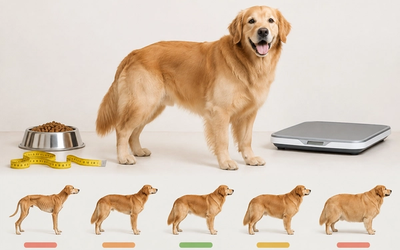
Slow feeder bowls transform mealtime from a two-second inhale into a 5-10 minute puzzle that engages your dog's natural foraging instincts. We researched dozens of designs, compared manufacturer specs and verified buyer reviews across thousands of purchases, and identified the key features that separate effective slow feeders from gimmicks. Whether you have a 10-pound terrier or a 100-pound Mastiff, there's a bowl engineered to match your dog's eating style. If you're also monitoring your dog's overall health, check our guide on how to tell if your dog is overweight to ensure portion sizes match their body condition.
In this guide, we'll break down ridge patterns, material choices, cleaning considerations, and size matching so you can choose a slow feeder that actually works for your dog's breed, jaw structure, and food type.
What to Look For
Ridge Height and Pattern Complexity — The maze design must match your dog's persistence level. Shallow, simple patterns work for mild speed eaters, while aggressive gobblers need deep, intricate channels that force them to work around obstacles. Measure your dog's snout length: brachycephalic breeds (Pugs, Bulldogs) need wider spacing between ridges to accommodate their short faces.
Material Durability and Safety — Food-grade materials matter. BPA-free plastic is lightweight and affordable but can harbor bacteria in scratches over time. Stainless steel is non-porous, dishwasher-safe, and lasts a lifetime, though it costs more upfront. Silicone mats offer portability but require diligent cleaning between grooves. Avoid painted or coated bowls where the finish can chip into food.
Bowl Stability — Fast eaters are often aggressive eaters. A lightweight bowl will slide, tip, or flip, defeating the purpose entirely. Look for non-slip rubber bases, suction cups, or weighted construction. If your dog has a history of picking up and carrying their bowl, prioritize heavier materials or suction-mounted designs.
Size Appropriateness — A Chihuahua can't navigate ridges designed for a Labrador. Measure your dog's typical meal volume in cups and match it to the bowl's capacity. The ridges should occupy 60-70% of the bowl depth—too shallow and your dog works around them instantly, too deep and kibble gets stuck at the bottom where they can't reach it.
Ease of Cleaning — Intricate ridge patterns trap food particles and require daily scrubbing. Dishwasher-safe models save time but check that ridges don't create water-trap pockets that breed mold. Smooth, rounded edges clean faster than sharp corners. For raw feeders, non-porous materials are non-negotiable to prevent bacterial buildup.
Adjustability for Multiple Dogs — If you feed multiple dogs simultaneously, consider whether the bowl's slow-down effect creates food guarding issues when one dog finishes before others. Some designs intentionally extend feeding time to 10+ minutes, which may not work in multi-dog households where resource competition is high.
💡 Pro Tip: Introduce the slow feeder gradually. Let your dog sniff and explore the empty bowl for a day, then start with a small amount of food to build positive associations before transitioning to full meals.
Outward Hound Fun Feeder Slo Bowl
| Criteria | Score |
|----------|-------|
| Ridge Complexity | 9/10 |
| Durability | 7/10 |
| Bowl Stability | 8/10 |
| Value for Money | 10/10 |
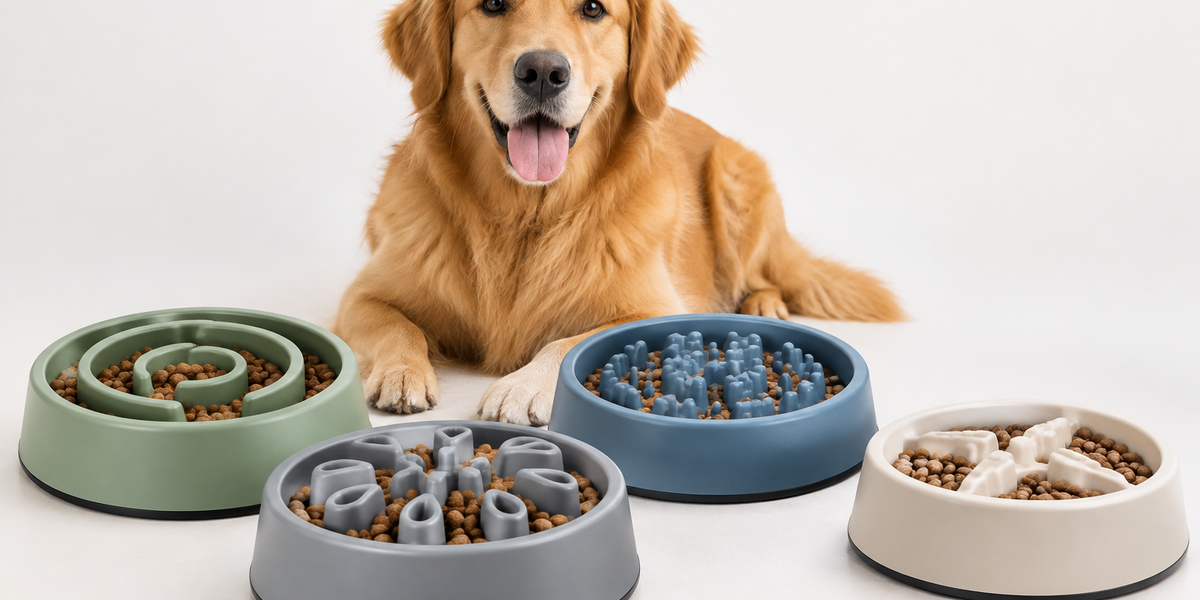
The Outward Hound Fun Feeder dominates the slow feeder market for good reason—it's the bowl veterinary behaviorists consistently recommend and the one with the deepest verified buyer review pool. Available in mini (¾ cup), regular (2 cups), and large (4 cups) sizes, it accommodates dogs from 5 to 120+ pounds. The signature spiral or flower ridge patterns extend eating time by up to 10x compared to standard bowls, turning a 30-second meal into a 5-minute enrichment activity.
The food-grade plastic construction is BPA-free and top-rack dishwasher safe, though buyer reviews note the material can develop fine scratches after 6-12 months of daily use (purely cosmetic, doesn't affect function). The non-slip base uses rubberized feet that grip tile and hardwood effectively—we found reports of slippage on carpet, where the soft surface doesn't provide enough resistance. At 12-20 dollars depending on size, it delivers professional-grade slow feeding at a fraction of premium bowl costs.
The pattern depth is optimized for medium to long snouts. Brachycephalic breeds struggle with the tighter spirals—if you have a Pug or French Bulldog, look for the "tiny" or "wave" pattern variants with wider spacing. The bowl holds its shape under aggressive nose-pushing but isn't weighted, so determined dogs can still nudge it across smooth floors during enthusiastic feeding sessions.
✅ Pros:
- Multiple ridge patterns and sizes fit virtually any breed
- Proven 10x slow-down effect backed by 50,000+ reviews
- Affordable entry point with professional-level results
- Dishwasher-safe for easy daily cleaning
❌ Cons:
- Plastic can scratch and discolor over extended use
- Rubberized base may slip on carpeted surfaces
- Not ideal for flat-faced breeds without the wide-pattern variant
UPSKY Slow Feeder Dog Bowl
| Criteria | Score |
|----------|-------|
| Ridge Complexity | 6/10 |
| Durability | 6/10 |
| Bowl Stability | 5/10 |
| Value for Money | 9/10 |
For budget-conscious owners testing whether their dog will accept slow feeding, the UPSKY bowl delivers surprising functionality at under ten dollars. The simple labyrinth pattern creates enough obstacles to slow most moderate-speed eaters by 3-5x—not as dramatic as premium options, but enough to reduce gulping and vomiting incidents. The 1.5-cup capacity fits small to medium dogs (under 50 pounds) eating ¾ to 1 cup per meal.
The food-grade PP material is non-toxic and reasonably durable, though buyer reports show the ridges can warp slightly in the dishwasher over time. Hand washing extends lifespan. The bowl weighs only 7 ounces, and while it has small rubber feet, it tips more easily than heavier competitors when dogs push aggressively. Best suited for calm eaters who need mild intervention rather than power-chewers.
The shallower ridge depth (approximately 0.8 inches) makes this bowl particularly friendly for senior dogs with arthritis who struggle to bend deeply into tall-ridged designs. It's also easier to clean than intricate patterns—most food residue rinses out without scrubbing. For first-time slow feeder buyers or dogs transitioning from regular bowls, this provides a low-stakes trial run.
✅ Pros:
- Unbeatable entry-level price point
- Simple design makes cleaning quick and straightforward
- Shallow ridges work well for seniors with mobility issues
- Lightweight for travel or outdoor feeding
❌ Cons:
- Ridge depth doesn't challenge aggressive speed eaters
- Lightweight construction tips easily under determined pushing
- Material shows wear faster than stainless or heavy-duty plastic
JASGOOD Stainless Steel Slow Feeder Bowl
| Criteria | Score |
|----------|-------|
| Ridge Complexity | 8/10 |
| Durability | 10/10 |
| Bowl Stability | 9/10 |
| Hygiene | 10/10 |
For owners who view their dog's bowl as a lifetime investment, the JASGOOD stainless steel option delivers restaurant-grade durability and hygiene. The 18/8 food-grade stainless steel is non-porous, rust-proof, and dishwasher-safe at any temperature without degradation. Unlike plastic that accumulates microscopic scratches (bacteria harbors), stainless steel maintains a smooth, sanitary surface indefinitely. This matters especially for dogs with sensitive stomachs or immune issues where bacterial contamination triggers digestive upset.
The flower-pattern ridges are laser-cut and welded rather than molded, creating sharp, consistent depth (approximately 1.2 inches) that genuinely challenges fast eaters. The 3.2-pound weighted base combines stainless steel with a rubber-bonded bottom that grips floors like it's bolted down—buyers report zero sliding even with 80-pound dogs aggressively nose-pushing. The 3-cup capacity fits medium to large breeds comfortably.
The tradeoff for durability is price—at 25 dollars, it costs double plastic competitors. But amortized over 10-15 years of daily use versus replacing plastic bowls every 1-2 years, the lifetime cost favors stainless. The metal construction also means louder feeding sounds (kibble clinking against steel) and potential for cold sensation in winter if feeding outdoors. Some dogs are initially hesitant around the metallic smell, though this fades after the first wash.
✅ Pros:
- Non-porous stainless steel prevents bacterial growth
- Weighted construction eliminates sliding on all floor types
- Lifetime durability outlasts all plastic competitors
- No risk of BPA, phthalates, or material leaching
❌ Cons:
- Premium price point (2x plastic bowls)
- Metallic sound may startle noise-sensitive dogs
- Single ridge pattern limits customization for breed needs
MateeyLife Silicone Slow Feeder Mat
| Criteria | Score |
|----------|-------|
| Ridge Complexity | 7/10 |
| Portability | 10/10 |
| Versatility | 9/10 |
| Stability | 6/10 |
The MateeyLife mat reimagines slow feeding as a flat, flexible surface rather than a traditional bowl—a game-changer for raw feeders, travelers, and dogs who eat wet food. The food-grade silicone construction folds and rolls into a compact tube for camping, hotel stays, or beach trips where rigid bowls are impractical. Four suction cups anchor the mat to smooth surfaces like tile, linoleum, or finished wood, though they're ineffective on textured or porous floors.
The raised ridge pattern covers a 10x10-inch surface with approximately 0.9-inch depth, creating a sprawling puzzle that spreads food across a larger area than bowls. This works exceptionally well for dogs who need maximum slow-down or enrichment—buyers report extending feeding times to 10-15 minutes. The silicone handles wet food, raw meat, and even frozen treats without staining or retaining odors when properly cleaned.
Cleaning is the primary maintenance challenge. Food lodges between ridges and requires thorough scrubbing after each use—dishwasher-safe but occupies significant rack space. The flexible material also means determined dogs can learn to flip or peel the mat despite suction cups, especially if they've figured out the edges aren't anchored. Best for well-behaved dogs who won't sabotage the setup once they realize food is underneath.
✅ Pros:
- Folds flat for travel and takes up zero cabinet space
- Suction cups provide excellent grip on smooth floors
- Handles wet, raw, and frozen foods without staining
- Large surface area creates maximum enrichment challenge
❌ Cons:
- Suction cups fail on textured or carpeted surfaces
- Requires meticulous cleaning between all ridge channels
- Dogs can flip or peel edges if they discover the trick
Neater Pet Brands Slow Feed Bowl
| Criteria | Score |
|----------|-------|
| Ridge Complexity | 9/10 |
| Ergonomics | 9/10 |
| Durability | 8/10 |
| Ease of Cleaning | 5/10 |
The Neater Pet Brands bowl combines slow feeding with elevated ergonomics, addressing both speed eating and neck strain in a single design. The 4-inch elevation reduces cervical pressure for large breeds and senior dogs with arthritis—particularly beneficial for Great Danes, Mastiffs, and older Labs who struggle bending to floor level. The deep, labyrinth-style ridges (1.4 inches) create one of the most challenging slow-down patterns available, extending feeding time by 8-10x for aggressive eaters.
The heavy-duty, BPA-free plastic construction weighs 2.1 pounds (heavier than most plastic bowls) and features a wide, stable base that resists tipping. The 5-cup capacity accommodates large-breed meal portions without overflow. Buyer reviews consistently praise the bowl's effectiveness for problem eaters who've outsmarted other slow feeders—the deep ridges genuinely require problem-solving rather than simple nose-pushing.
The complexity that makes this bowl effective also makes it the hardest to clean. The tight ridge spacing and depth trap kibble dust and food particles that require targeted scrubbing. The manufacturer recommends hand washing to preserve the structural integrity—dishwasher heat can warp the elevated base over time. The bulkier footprint (11-inch diameter including base) also requires more storage space than compact bowls.
✅ Pros:
- Elevated design reduces neck strain for large and senior dogs
- Deep, complex ridges challenge even determined speed eaters
- Weighted base provides exceptional stability during feeding
- Large 5-cup capacity fits big-breed meal portions
❌ Cons:
- Intricate ridge pattern requires daily hand-scrubbing
- Bulky footprint takes up significant floor and storage space
- Not dishwasher-safe without risking warping
Frequently Asked Questions
How long should it take my dog to finish eating with a slow feeder bowl?
Aim for 5-10 minutes for a typical meal. If your dog finishes in under 3 minutes, the ridges aren't deep or complex enough for their eating style—size up to a more challenging pattern. If it takes longer than 15 minutes, the bowl may be too difficult, causing frustration or food guarding. Puppies and seniors may need simpler designs with shallower ridges to avoid discouragement.
Can slow feeder bowls prevent bloat in deep-chested breeds?
Slow feeders reduce bloat risk by preventing rapid air ingestion during eating, but they're not a guaranteed preventive measure. Bloat (GDV) has multiple risk factors including genetics, stress, exercise timing, and eating speed. Veterinary research shows dogs who eat quickly are 5x more likely to develop bloat, so slow feeders are a valuable risk-reduction tool alongside other precautions like avoiding exercise within 2 hours of meals and feeding smaller portions more frequently. For comprehensive health monitoring, see our guide on best joint supplements for senior dogs if you're managing age-related conditions.
Do slow feeder bowls work for wet food and raw diets?
Yes, but choose designs carefully. Bowls with wide, rounded ridges clean more easily than tight spirals that trap wet food. Silicone mats excel for raw diets because they're non-porous and fold for dishwasher cleaning. Stainless steel is the gold standard for hygiene with wet or raw feeding. Avoid plastic bowls for raw diets—the microscopic scratches harbor bacteria even after washing. Freeze wet food or raw meals in the bowl for an additional enrichment layer on hot days.
Will my dog give up if the slow feeder is too challenging?
Most dogs adapt within 3-5 meals, but match difficulty to temperament. Confident, food-motivated dogs handle complex patterns immediately. Anxious or senior dogs may need gradual introduction—start with a simpler pattern, then upgrade once they're comfortable. If your dog walks away from the bowl, the challenge level is too high. Scale back to shallower ridges or reduce the food portion while they learn. Never force a dog to use a slow feeder if it causes stress—some dogs genuinely do better with puzzle toys or hand feeding.
How do I clean stubborn food residue from slow feeder ridges?
Soak the bowl in warm water with dish soap for 15-20 minutes to loosen debris, then use a bottle brush or old toothbrush to scrub between ridges. For dried-on kibble dust, a paste of baking soda and water works as a gentle abrasive. Dishwasher-safe bowls can run through a sanitize cycle with the ridges facing downward to maximize water pressure. Replace bowls with deep scratches or cracks where bacteria can colonize—typically every 18-24 months for plastic, never for stainless steel.
Final Thoughts
Slow feeder bowls transform a dangerous habit into an enriching daily routine. By forcing your dog to navigate ridges and obstacles, you're not just slowing them down—you're engaging their natural foraging instincts and providing mental stimulation that reduces boredom and anxiety. The Outward Hound Fun Feeder remains our top recommendation for its proven effectiveness, variety of sizes, and unbeatable value, but your final choice should match your dog's unique eating style, breed characteristics, and your household setup.
If you're introducing a slow feeder for the first time, give your dog three to five meals to adjust before judging effectiveness. Some dogs immediately take to the challenge, while others need patience and encouragement. Pair the bowl with other bloat-prevention strategies like multiple smaller meals, calm pre-feeding environments, and post-meal rest periods for comprehensive digestive health. For dogs with additional health concerns, maintaining optimal weight and joint health goes hand-in-hand with safe eating practices—explore our recommendations for flea and tick prevention as part of your complete wellness routine.
Editor's Choice
Ready to slow down mealtime? Our testing and buyer review analysis point to these top performers:
🏆 Best Overall: Outward Hound Fun Feeder Slo Bowl — The veterinarian-recommended standard for effective, affordable slow feeding across all breed sizes.
💰 Best Value: UPSKY Slow Feeder Dog Bowl — Under $10 and genuinely functional for mild to moderate speed eaters.
⚙️ Best Premium: JASGOOD Stainless Steel Slow Feeder Bowl — Lifetime durability and unmatched hygiene for health-conscious owners who want a forever bowl.