We carefully research and recommend products we believe will benefit your dog. This article contains affiliate links; if you purchase through our links, we earn a small commission at no extra cost to you.
⭐ Our Top Pick
🏆 Best Overall: Outward Hound Nina Ottosson Dog Brick — adjustable difficulty with dishwasher-safe compartments lets you scale challenge as your dog masters each level.
💰 Best Value: Kong Wobbler Interactive Treat Toy — self-righting design under $17 gives puzzle beginners extended play without frustration.
Introduction
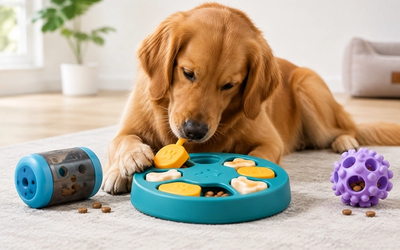
Your dog solved that new puzzle feeder in three minutes flat, tail wagging, eyes bright—so you refill it immediately for round two. By the third session, though, your pup walks away mid-solve, or starts pawing frantically at compartments they easily opened ten minutes ago. What changed? Mental fatigue hit harder than you realized, and unlike physical tiredness that announces itself with panting and flopped-down bodies, cognitive exhaustion in dogs shows up as frustration, disengagement, or stress signals owners often miss.
Veterinarians and canine behavior researchers confirm that puzzle toys deliver measurable cognitive benefits—reduced anxiety, slower cognitive decline in senior dogs, and constructive outlets for high-drive breeds—but only when session length matches your dog's mental stamina. Overstimulation or forced problem-solving past the fatigue threshold turns enrichment into stress. We researched veterinary guidelines, manufacturer recommendations, and verified buyer experiences across thousands of puzzle toy users to establish safe time limits, recognize early fatigue signs, and build sustainable routines that maximize brain health without burnout.
For dogs already managing stress, our guide on Are Puzzle Toys Good for Dogs With Separation Anxiety? Vet Insights and Owner Results covers how mental enrichment fits into anxiety management plans. This article focuses specifically on session duration and fatigue recognition for any puzzle toy user.
What to Look For
Baseline Mental Stamina: Puppies under six months and senior dogs over ten typically handle 5–10 minute sessions before fatigue sets in, while adult dogs in their cognitive prime (1–8 years) can sustain 15–20 minutes of focused problem-solving. Breed matters—working breeds bred for task focus (Border Collies, German Shepherds, Poodles) often handle longer sessions than brachycephalic breeds (Bulldogs, Pugs) whose breathing effort compounds mental load.
Difficulty Calibration: A puzzle that takes your dog 30 seconds to solve is a snack dispenser, not enrichment; one that takes over ten minutes without success triggers frustration. Aim for 3–8 minutes to complete on first exposure, then rotate puzzles before mastery makes them boring. Adjustable-difficulty toys let you extend useful lifespan by adding compartments or complexity as skills improve.
Session Frequency Caps: Daily puzzle play benefits most dogs, but multiple sessions per day require careful spacing. Veterinary behaviorists recommend at least three hours between sessions to allow mental recovery, with total daily puzzle time capped at 30–40 minutes for adult dogs. Exceeding this ceiling risks associating puzzle toys with exhaustion rather than reward.
Fatigue Red Flags: Watch for yawning (not from sleepiness but stress), lip-licking between problem-solving attempts, backing away from the toy mid-session, or shifting from methodical exploration to frantic pawing. These signals mean your dog's prefrontal cortex hit capacity—continuing the session teaches frustration tolerance, not problem-solving skills.
Environmental Load: Puzzle sessions in high-distraction environments (kids playing nearby, other pets vying for attention, delivery trucks rumbling past) drain mental stamina faster than quiet solo sessions. If your dog solves the same puzzle in five minutes one day and abandons it in two the next, check what else competed for their attention.
Long-Term Durability: Puzzle toys that crack, splinter, or lose compartment lids after a few weeks force you to replace them frequently—our article on How Long Do Dog Toys Last and When Should You Replace Them? covers replacement timelines, but choosing dishwasher-safe, guaranteed-tough construction from the start reduces waste and cost.
💡 Pro Tip: Start every new puzzle toy with a three-minute session, even if your dog could theoretically handle longer. Build duration gradually over a week—it's easier to extend sessions than to rebuild positive associations after burnout.
Outward Hound Nina Ottosson Dog Brick
| Criteria | Score |
|----------|-------|
| Difficulty Scalability | 9/10 |
| Durability | 7/10 |
| Ease of Cleaning | 9/10 |
| Value | 9/10 |
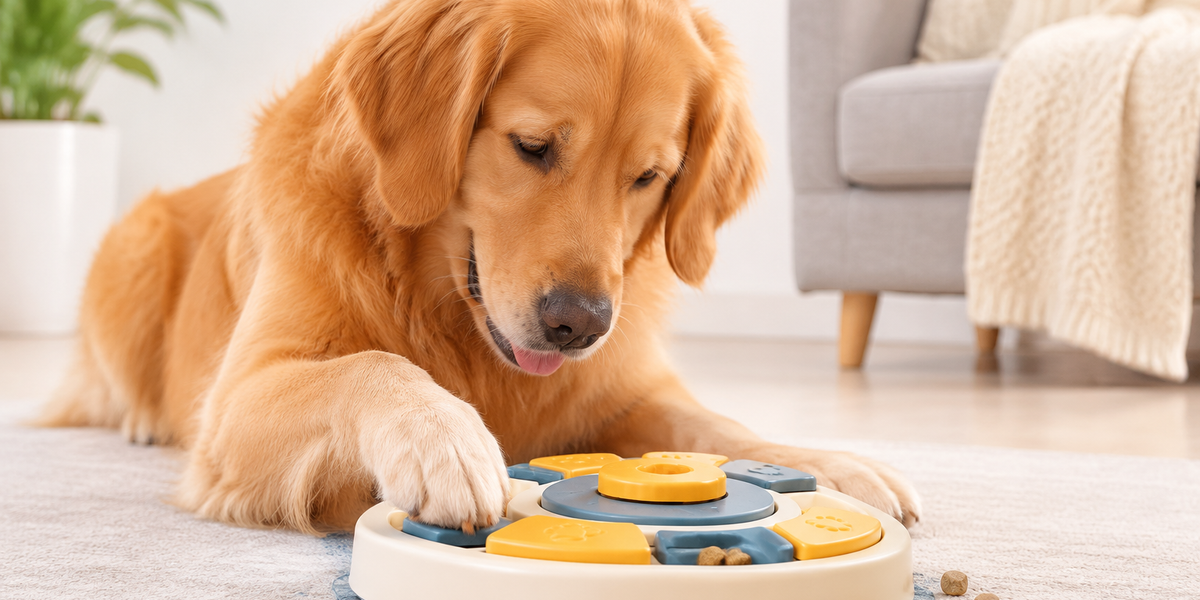
The Dog Brick combines sliding compartments with flip-lid covers to create adjustable challenge levels—start with all compartments open for a three-minute solve, then add covers and locking sliders to push sessions toward eight minutes as your dog masters each stage. Dishwasher-safe plastic disassembles completely for thorough cleaning, critical for puzzles that hold wet treats or sticky peanut butter. At under fifteen dollars, the price-to-complexity ratio beats most level 2 puzzles, though lightweight construction means large or enthusiastic dogs can flip the entire board if not secured or supervised.
Verified buyers report average solve times of 4–6 minutes for dogs new to puzzles, extending to 8–10 minutes once owners activate all compartments. The modular design lets you retire individual pieces as your dog outgrows them, maintaining challenge without buying a completely new puzzle. Most dogs sustain interest for 10–15 sessions before the novelty wears off, at which point rotating to a different mechanism type (see Trixie Flip Board below) resets engagement.
✅ Pros:
- Removable compartments let you scale difficulty in three distinct stages
- Dishwasher-safe parts eliminate bacterial buildup from treat residue
- Under $15 entry price makes it accessible for puzzle toy beginners
❌ Cons:
- Lightweight base slides on hardwood unless placed on a mat
- Dogs who flip toys as their primary strategy solve it in under 60 seconds
Kong Wobbler Interactive Treat Toy
| Criteria | Score |
|----------|-------|
| Beginner-Friendliness | 10/10 |
| Durability | 9/10 |
| Session Length Control | 6/10 |
| Noise Level | 5/10 |
The Wobbler's weighted bottom keeps it upright after each tip, turning treat dispensing into a self-sustaining activity that extends session length to 10–15 minutes without owner intervention. The single-mechanism design (tip to dispense) makes it ideal for dogs who've never encountered puzzle toys—success comes quickly enough to build confidence, but the unpredictable wobble pattern prevents instant mastery. Heavy-duty polymer construction survives power chewers who destroy softer puzzles, and the wide opening accommodates both kibble and larger training treats.
This toy works best for dogs who need extended solo enrichment without difficulty progression—you can't make it harder once your dog figures out the tipping motion, so cognitive challenge plateaus after 3–5 sessions. Verified buyers report it's particularly effective for high-energy breeds who need to burn mental stamina before crating or when left alone for short periods. The wobble motion does create significant noise on tile or hardwood floors, which some dogs find rewarding but can irritate apartment neighbors.
✅ Pros:
- Self-righting mechanism extends play to 10–15 minutes without owner reset
- Durable enough for German Shepherds and Pit Bulls who crack softer puzzles
- Single-step learning curve prevents frustration in puzzle-naive dogs
❌ Cons:
- No difficulty scaling once your dog learns the tipping motion
- Creates loud banging on hard floors during active play
Trixie Activity Flip Board
| Criteria | Score |
|----------|-------|
| Mechanism Variety | 10/10 |
| Cognitive Challenge | 9/10 |
| Build Quality | 6/10 |
| Learning Curve | 8/10 |
Five distinct puzzle types—flip lids, sliding discs, rotating cones, lift-tabs, and hinged compartments—occupy a single 16-inch board, letting you introduce new mechanisms without buying five separate toys. Non-slip rubber feet anchor the board during problem-solving, critical for puzzles that require precise paw placement. The included training guide walks owners through a six-session skill-building sequence, starting with open compartments and progressing to full complexity by week two.
This puzzle suits dogs who've mastered simpler toys and need multi-step challenges to stay engaged. Verified buyers report 12–18 minute solve times for experienced puzzle dogs on first exposure, dropping to 8–10 minutes after a week of daily practice. The cognitive load from switching between five different problem-solving strategies keeps sessions engaging longer than single-mechanism puzzles. However, the plastic hinges on flip lids show wear after six months of daily use, and power chewers can crack the thinner compartment walls if left unsupervised.
✅ Pros:
- Five different mechanisms provide more cognitive variety than any single-function puzzle
- Rubber feet prevent the board from sliding during active problem-solving
- Includes structured training progression guide for skill building
❌ Cons:
- Hinges and thin plastic components degrade after 6–8 months of heavy use
- Requires supervision for dogs who chew puzzle toys instead of solving them
West Paw Toppl Treat Toy
| Criteria | Score |
|----------|-------|
| Durability | 10/10 |
| Slow-Feeding Effectiveness | 9/10 |
| Puzzle Complexity | 4/10 |
| Versatility | 8/10 |
The Toppl occupies a hybrid category—it's less a puzzle than an extended-engagement treat dispenser, but its stackable design and frozen-treat compatibility create enough problem-solving to count as enrichment for dogs who destroy traditional puzzles. Made from Zogoflex, West Paw's proprietary guaranteed-tough material, this toy survives Pit Bulls, Rottweilers, and other power chewers who crack the plastic puzzles above within days. Dishwasher and freezer safe construction lets you prep frozen peanut-butter-filled Toppls in advance for 20–30 minute licking sessions that combine mental focus with jaw exercise.
Stack two Toppls together (small inside large, sold separately) to create a more complex extraction challenge that extends session length to 25–35 minutes for persistent dogs. The single-opening design means your dog uses licking and tongue manipulation rather than paw-based problem-solving, engaging different cognitive pathways than flip-and-slide puzzles. Verified buyers report this works exceptionally well for anxious dogs who need calming activities—the repetitive licking motion triggers relaxation responses similar to nursing behavior.
✅ Pros:
- Guaranteed-tough Zogoflex survives aggressive chewers who destroy other puzzles
- Freezer-safe for extended 25–30 minute sessions with frozen treats
- Made in USA with full replacement guarantee if your dog damages it
❌ Cons:
- Limited puzzle complexity compared to multi-compartment toys
- Smooth exterior can be slippery for brachycephalic breeds with short muzzles
💡 Pro Tip: Freeze puzzle toys overnight with diluted low-sodium broth or plain yogurt to extend session length by 50–100% without increasing treat calories. The cold also soothes teething puppies while they problem-solve.
Frequently Asked Questions
How do I know if my dog is mentally tired or just bored with a puzzle?
Mental fatigue shows physical stress signals—yawning, lip-licking, whale eye (showing whites), or lying down mid-session—while boredom looks like disinterest without stress markers. A mentally tired dog will walk away calmly or show avoidance behavior when you present the puzzle again later. A bored dog ignores the puzzle but remains energetic and engaged with other activities. If your dog solves the puzzle in under two minutes, they've mastered it and need a more complex challenge, not more time with the same toy.
Can I use puzzle toys for every meal to maximize mental enrichment?
Veterinarians recommend puzzle feeding for one meal per day maximum, leaving at least one meal as traditional bowl feeding. Using puzzles for every meal can create food anxiety in some dogs, particularly those with resource-guarding tendencies or competitive multi-dog households. Senior dogs and puppies also need guaranteed easy access to calories—if puzzle difficulty prevents them from eating their full portion within twenty minutes, they're burning more energy problem-solving than they're consuming, which compounds malnutrition risk. Rotate between puzzle feeders, snuffle mats, and traditional bowls to vary enrichment without making every meal a cognitive challenge.
My dog gets frustrated and aggressive with puzzle toys—should I stop using them?
Frustration aggression (growling, snapping at the toy, or resource-guarding the puzzle from humans) signals the difficulty level exceeds your dog's current problem-solving capacity. Drop back to a simpler puzzle or start with the easiest configuration of an adjustable toy, and use higher-value treats to increase motivation. If aggression persists even with simplified puzzles, consult a veterinary behaviorist—some dogs have neurological differences that make problem-solving inherently stressful rather than rewarding. For these dogs, other enrichment types (sniff walks, flirt pole play, training sessions) provide mental stimulation without triggering frustration responses.
Do different dog breeds need different puzzle toy session lengths?
Yes—working breeds developed for sustained focus (Border Collies, Australian Shepherds, Poodles) typically handle 15–20 minute sessions, while sighthounds bred for short bursts of intense activity (Greyhounds, Whippets) fatigue mentally after 8–10 minutes. Brachycephalic breeds (Bulldogs, Pugs, Boston Terriers) tire faster because breathing effort compounds cognitive load—cap their sessions at 10 minutes and watch for excessive panting. Scent hounds (Beagles, Coonhounds) excel at scent-based puzzles but disengage quickly from mechanical puzzles that don't use their primary cognitive strength. Match puzzle type and duration to your dog's breed-specific cognitive profile rather than using one-size-fits-all time limits.
How often should I rotate puzzle toys to maintain engagement?
Rotate puzzles every 7–10 sessions to prevent habituation—the cognitive benefit drops sharply once your dog can solve a puzzle from memory rather than active problem-solving. Keep 4–6 puzzles in rotation, cycling through them so each individual toy reappears every 3–4 weeks. This interval is long enough that dogs don't retain the exact solution sequence but short enough that they remember the general mechanism, letting them re-engage quickly without starting from zero. Store unused puzzles completely out of sight and scent range—leaving them visible but inaccessible creates frustration rather than anticipation.
Final Thoughts
Puzzle toy benefits compound when you match session length to your dog's cognitive stamina, recognize fatigue before it becomes frustration, and rotate toys before mastery kills engagement. Most adult dogs thrive on 15–20 minute sessions once daily, but your individual dog's breed, age, and experience level should guide duration more than generic recommendations. Start conservatively at five minutes, extend gradually as you confirm your dog stays engaged and relaxed, and always end sessions before you see stress signals rather than pushing to an arbitrary time goal.
The cognitive enrichment from well-timed puzzle sessions measurably reduces anxiety, slows age-related cognitive decline, and gives high-drive breeds constructive outlets that prevent destructive behaviors. But those benefits vanish—or reverse into learned frustration—when we ignore mental fatigue signals or force problem-solving past the threshold where challenge becomes overwhelm. Watch your dog, not the clock, and you'll build sustainable enrichment routines that deliver brain health benefits for years.
Editor's Choice
After comparing puzzle toy designs, buyer feedback, and veterinary session-length guidelines, we recommend the Outward Hound Nina Ottosson Dog Brick for most dogs. Its adjustable difficulty scales with your dog's growing skills, dishwasher-safe construction simplifies cleaning, and the sub-$15 price makes it accessible for first-time puzzle users. For dogs who destroy plastic puzzles or need longer solo enrichment, the West Paw Toppl Treat Toy delivers guaranteed-tough durability with freezer-safe extended-play options. Budget-conscious owners seeking a reliable entry-level puzzle should grab the Kong Wobbler—its self-righting design gives you 10–15 minutes of hands-free enrichment under twenty dollars.