We earn a commission if you make a purchase, at no additional cost to you.
⭐ Our Top Pick
🏆 Best Overall: Arf Pets Self-Cooling Mat — pressure-activated gel cooling that works without electricity, perfect for spontaneous road trips.
💰 Best Value: OPOLAR Battery Operated Clip Fan — clips to any headrest or crate and runs for 24 hours on a single charge.
Introduction
Your car's AC died in the middle of a cross-country road trip, or maybe you're driving an older vehicle that never had reliable climate control. Either way, summer heat and a dog in the backseat create a dangerous situation fast. Dogs can't sweat like humans, so they rely on panting and external cooling to regulate body temperature. When cabin temps climb above 80°F, heatstroke risk becomes real.
We've researched veterinary guidelines, manufacturer specs, and thousands of verified buyer reviews to compile practical strategies that work without functioning air conditioning. These aren't just theoretical tips — they're the methods experienced road-trippers use to keep dogs safe during long drives through hot climates. If you're also planning backcountry adventures, our Best Dog Backpack Carriers for Hiking 2026: Small Breed and Senior Dog Options guide covers gear that keeps dogs comfortable on the trail.
From portable cooling mats and battery-powered fans to hydration tactics and ventilation hacks, this guide walks through everything you need to manage summer car travel without AC. We'll cover what gear actually delivers measurable cooling, how to set up your vehicle for maximum airflow, and the warning signs that mean you need to pull over immediately.
What to Look For
Passive Cooling Technology: Self-cooling mats, evaporative vests, and reflective sun shades reduce heat without needing a power source. Look for pressure-activated gel or water-soaked fabrics that cool through evaporation.
Portable Airflow Solutions: Battery-operated fans or 12V plug-in models provide circulation when windows alone aren't enough. Prioritize clip-on designs that mount to headrests or crate doors, and check runtime specs (aim for 6+ hours on a charge).
Hydration Capacity: Insulated water jugs keep water cold for 12-24 hours. Pair them with spill-proof travel bowls — if you're stocking your travel kit, our Best Collapsible Dog Bowls for Hiking 2026: Lightweight and Leakproof Options roundup covers portable bowls that work in cars too.
Temperature Monitoring: Wireless thermometers with smartphone alerts let you track cabin temp from outside the vehicle during rest stops. Some models include humidity sensors, which matter for breeds prone to respiratory issues.
Ventilation Design: Window shades, vent visors, and cracked-window locks improve airflow while maintaining security. Mesh barriers let you open windows wider without escape risk.
Emergency Preparedness: Instant cold packs, cooling bandanas, and portable misting bottles provide fast intervention if your dog shows heat stress symptoms during the drive.
Arf Pets Self-Cooling Mat
| Criteria | Score |
|----------|-------|
| Cooling Duration | 7/10 |
| Portability | 9/10 |
| Ease of Use | 10/10 |
| Value | 8/10 |
This pressure-activated gel mat requires zero prep — no freezing, no electricity, no water. When your dog lies down, their body weight triggers the gel to absorb heat and disperse it into the mat's core. Buyers report 2-3 hours of noticeable cooling per session, which resets after the mat sits unused for 15-20 minutes. The 35" x 20" size fits most backseat footwells or cargo areas, and it rolls up to the size of a yoga mat for storage. The durable outer fabric resists punctures from claws, though some users recommend placing a towel underneath for extra protection on rough surfaces.
✅ Pros:
- Works immediately without prep time
- Lightweight at 2.3 lbs — easy to move between vehicles
- No batteries or power cords to manage
❌ Cons:
- Cooling effect diminishes after 2-3 hours of continuous use
- Some dogs won't stay still on the slick surface
OPOLAR Battery Operated Clip Fan
| Criteria | Score |
|----------|-------|
| Airflow Power | 7/10 |
| Battery Life | 9/10 |
| Mounting Versatility | 10/10 |
| Noise Level | 8/10 |
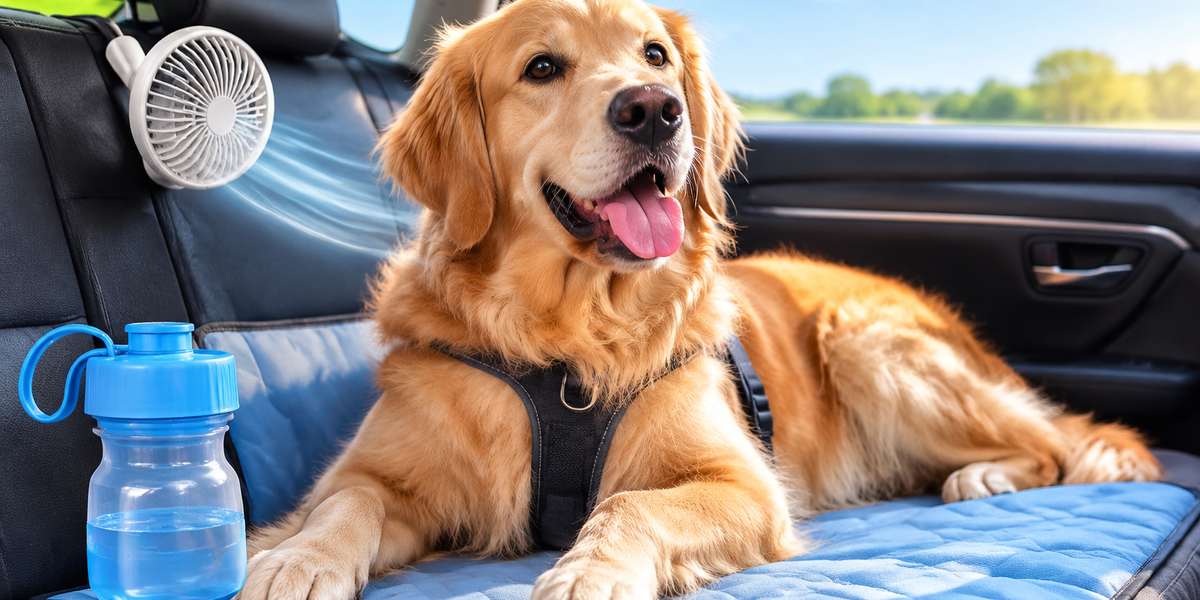
This rechargeable fan clips to headrests, crate bars, or seat belt loops to aim airflow directly at your dog. The 10,000mAh battery runs up to 24 hours on low speed or 6-8 hours on high, and it charges via USB-C in about 3 hours. The adjustable head rotates 360° and tilts 120°, letting you redirect air as your dog shifts positions. Verified buyers note the low and medium speeds are whisper-quiet, though high speed generates noticeable hum. The clip mechanism grips securely on bars up to 1.5" diameter — owners of wire crates and cargo barriers report it stays locked even on bumpy roads.
✅ Pros:
- All-day runtime eliminates mid-trip recharging
- Flexible mounting works with most vehicle interiors
- Three speed settings adapt to temperature changes
❌ Cons:
- Less powerful than 12V plug-in fans
- Requires overnight charging between multi-day trips
Ruffwear Swamp Cooler Vest
| Criteria | Score |
|----------|-------|
| Cooling Effectiveness | 9/10 |
| Durability | 10/10 |
| Comfort & Fit | 8/10 |
| Value | 6/10 |
Soak this vest in water for 1-2 minutes, wring out excess, and the three-layer evaporative fabric keeps your dog cool for 2-4 hours depending on humidity and airflow. The outer layer pulls moisture from the middle absorbent layer, and evaporation draws heat away from your dog's core. Reflective trim adds visibility for rest stop walks, and the chest and belly panels provide adjustable fit. It's built for active dogs — reinforced stitching and abrasion-resistant fabric hold up to scrambling in and out of vehicles. The tradeoff is the $80 price point, which some buyers consider steep for a product that requires periodic re-soaking.
💡 Pro Tip: Pre-soak the vest and store it in a sealed cooler bag during the drive. When your dog starts panting heavily, swap a fresh vest onto them and re-soak the used one for the next rotation.
✅ Pros:
- Scientifically proven evaporative cooling method
- Rugged construction survives rough handling
- Adjustable straps fit a wide range of body types
❌ Cons:
- Needs access to water for re-soaking every few hours
- Premium price compared to passive cooling mats
YETI Rambler 64 oz Bottle
| Criteria | Score |
|----------|-------|
| Insulation Performance | 10/10 |
| Capacity | 9/10 |
| Durability | 10/10 |
| Portability | 6/10 |
This vacuum-insulated stainless steel jug keeps water ice-cold for 24+ hours even in hot vehicles. The 64 oz capacity hydrates a medium-large dog for a full day of driving, and the wide mouth opening makes filling and pouring easy. The powder-coated exterior resists scratches and provides a secure grip. At 3.6 lbs when full, it's heavy but stable — it won't tip over on sharp turns like lighter bottles. Buyers consistently report ice still floating after overnight trips in 90°F+ weather. Pair it with a collapsible silicone bowl for mess-free water breaks.
✅ Pros:
- Industry-leading insulation maintains ice for over a day
- Rugged build quality withstands vehicle storage abuse
- BPA-free construction safe for pet drinking water
❌ Cons:
- Weighs 3.6 lbs when full — awkward for one-handed pouring
- Takes up significant cargo space
K&H Pet Products Portable Car Window Shade
| Criteria | Score |
|----------|-------|
| UV Protection | 8/10 |
| Ease of Installation | 9/10 |
| Visibility Impact | 7/10 |
| Value | 9/10 |
These static-cling mesh screens block up to 80% of UV rays while maintaining some visibility and allowing airflow through cracked windows. They fit most rear passenger windows and install in seconds without suction cups or adhesives. The mesh material reduces direct sun exposure, which can drop backseat temperatures by 10-15°F according to buyer reports. After a few weeks of use, the static cling weakens and requires occasional repositioning, but at $17 per pair, replacement cost is negligible. The shades fold flat for storage when not needed.
✅ Pros:
- Affordable sun protection for under $20
- No tools or permanent installation required
- Allows safe window cracking for ventilation
❌ Cons:
- Partially obstructs driver's rearview visibility
- Static cling loses grip over time and needs reapplication
Additional Cooling Strategies Without Gear
Maximize Cross-Ventilation: Open windows on opposite sides of the vehicle to create cross-breeze. Even at highway speeds, this airflow significantly reduces cabin temperature. If your dog rides in a crate, position it near an open window but not in direct sun.
Park Strategically: Choose shaded parking spots under trees or building overhangs. If shade isn't available, park so the sun hits the front of your vehicle rather than the backseat where your dog sits. Use a windshield sunshade to prevent radiant heat buildup.
Time Your Driving: Travel during cooler hours — early morning or after sunset. Midday driving in summer means fighting peak temperatures. If you must drive during hot hours, plan frequent breaks in air-conditioned buildings.
Wet Towel Method: Soak a towel in cold water, wring it out, and drape it over your dog's back and chest. The evaporation provides temporary cooling similar to a vest. Re-soak every 30-45 minutes for continuous effect.
Monitor Panting Patterns: Normal panting has a steady rhythm. If your dog's breathing becomes rapid, shallow, or labored, pull over immediately. Other heatstroke warning signs include excessive drooling, bright red gums, vomiting, and disorientation.
Hydration Schedule: Offer water every 30-45 minutes, even if your dog doesn't seem thirsty. Dogs often won't drink enough on their own during travel. Use ice cubes as snacks — they provide hydration and cooling.
Frequently Asked Questions
Can I leave my dog in a parked car without AC if I crack the windows?
No. Even with windows cracked, parked vehicles become deadly fast. Studies show cars reach 120°F+ in 30 minutes on 80°F days, and cracked windows reduce internal temperature by only 4-5°F. All the strategies in this guide apply to vehicles in motion with active airflow, not parked cars. If you must leave your vehicle, take your dog with you or have someone stay in the car with them.
How do I know if my dog is overheating?
Early signs include excessive panting, drooling, and restlessness. Advanced symptoms are bright red or pale gums, rapid heart rate, weakness, vomiting, and collapse. If you see these signs, stop immediately, move your dog to shade, offer small amounts of cool water, and apply cool (not ice-cold) wet towels to their belly, armpits, and paw pads. Get to a vet as soon as possible — heatstroke causes organ damage within minutes.
Are cooling mats safe for puppies and senior dogs?
Yes, pressure-activated gel mats are safe for all ages because they don't get cold enough to cause hypothermia. Avoid ice packs and frozen gel packs on very young, old, or sick dogs — prolonged direct contact can cause cold burns. Self-cooling mats stay around 5-10°F below ambient temperature, which provides relief without risk.
Do battery fans actually make a difference?
Yes, when used correctly. Fans don't lower air temperature, but they increase evaporation from panting, which improves your dog's ability to cool themselves. Position fans to blow across your dog's body, not directly at their face. Combine fans with cooling mats and hydration for best results.
What's the ideal cabin temperature for dogs in cars?
Keep the cabin below 75°F if possible, though this is difficult without AC in summer. Dogs tolerate heat differently by breed — brachycephalic breeds (Bulldogs, Pugs) overheat faster than lean, long-nosed breeds. If you can't maintain 75°F, focus on maximizing airflow and using cooling gear to help your dog regulate their temperature.
Final Thoughts
Traveling without functional AC requires proactive planning and the right gear, but it's manageable when you understand how dogs cool themselves and which interventions actually work. Portable cooling mats and battery fans are your first line of defense, backed up by strategic ventilation, cold water access, and careful monitoring. The key is layering multiple cooling methods rather than relying on a single solution.
Watch your dog's behavior continuously. If they're panting heavily despite your cooling efforts, pull over and reassess. Some days are simply too hot for safe travel without climate control — knowing when to postpone a trip is as important as knowing how to manage the heat. Stock your vehicle with the gear listed here, keep water ice-cold in an insulated jug, and plan routes with shaded rest stops. Your dog depends on you to make smart decisions about their safety.
Editor's Choice
For reliable cooling that works anywhere without power, we recommend the Arf Pets Self-Cooling Mat as your base layer solution. Pair it with the OPOLAR Battery Operated Clip Fan to maintain airflow during extended drives, and keep water ice-cold in a YETI Rambler 64 oz Bottle for all-day hydration. These three items create a comprehensive cooling system that functions independently of your vehicle's climate control.