We earn a commission if you make a purchase, at no additional cost to you.
⭐ Our Top Pick
🏆 Best Overall: PetSafe Drinkwell Platinum Pet Fountain — filtered, free-flowing water that encourages drinking and makes monitoring intake effortless.
💰 Best Value: UPSKY Dog Water Bowl No-Spill — a budget no-spill design with large capacity for tracking daily consumption.
Introduction
You refill your dog's water bowl in the morning, and by lunchtime it's bone dry. You refill again, and an hour later they're lapping up every drop. If your dog is suddenly drinking far more water than usual—a condition vets call polydipsia—it's natural to feel concerned. Increased thirst can be a harmless response to hot weather or extra exercise, but it can also be an early warning sign of serious health issues like diabetes, kidney disease, or hormonal imbalances.
We researched veterinary guidelines, compared manufacturer specs for hydration-monitoring tools, and reviewed buyer feedback to help you understand what's normal, what's not, and when to pick up the phone and call your vet. In this guide, we'll walk through eight common medical causes of excessive thirst, the red flags that demand immediate attention, and practical ways to track your dog's water intake at home. If you're also watching for other health changes, see our How to Tell If Your Dog Is in Pain: 12 Warning Signs Vets Want You to Know guide for a broader symptom checklist.
What to Look For
Baseline water intake: Most dogs drink about 1 ounce of water per pound of body weight per day. A 50-pound dog should consume roughly 50 ounces (about 6 cups) daily. Anything significantly above that threshold—especially if it appears suddenly—warrants attention.
Accompanying symptoms: Excessive thirst rarely occurs in isolation. Watch for increased urination, accidents indoors, lethargy, vomiting, changes in appetite, or unexplained weight loss. The combination of symptoms helps your vet narrow the diagnosis.
Measurement tools: A water bowl with measurement markings or a pet fountain with visible capacity indicators makes it easier to track daily intake. If you suspect a problem, measure and log how much water you add each day for three to five days before your vet appointment.
Duration and pattern: A single day of heavy drinking after a long hike is normal. Sustained excessive thirst lasting more than 48 hours—especially in moderate weather with no change in activity—is cause for concern.
Age and breed factors: Senior dogs and certain breeds (Labrador Retrievers, German Shepherds, and Golden Retrievers) are more prone to conditions that cause polydipsia. Puppies naturally drink more relative to their size, but a sudden spike still needs evaluation.
Environmental changes: Rule out obvious triggers first. Did you switch to a saltier dog food? Is your home warmer than usual? Have you started a new medication? Sometimes the answer is simple, but it's still worth documenting.
8 Common Health Causes of Excessive Thirst in Dogs
1. Diabetes Mellitus
Diabetes prevents your dog's body from properly using glucose, leaving sugar circulating in the bloodstream. The kidneys attempt to flush out the excess glucose through urine, pulling water along with it and triggering intense thirst to compensate for the fluid loss.
Key signs: Increased urination, weight loss despite normal or increased appetite, lethargy, and sometimes a sweet or fruity smell to the breath. Unspayed female dogs and certain breeds like Miniature Schnauzers and Poodles face higher risk.
What to do: Your vet will run a blood glucose test and urinalysis. If diabetes is confirmed, treatment typically involves twice-daily insulin injections, a prescription diet, and regular glucose monitoring at home.
2. Kidney Disease (Chronic or Acute)
Healthy kidneys concentrate urine and regulate fluid balance. When kidney function declines—whether from age, infection, toxins, or genetic factors—the kidneys lose their ability to concentrate urine, producing large volumes of dilute urine and triggering compensatory thirst.
Key signs: Increased urination, poor appetite, vomiting, bad breath, weight loss, and sometimes ulcers in the mouth. Chronic kidney disease is especially common in senior dogs.
What to do: Blood work (specifically creatinine and BUN levels) and urinalysis confirm the diagnosis. Treatment focuses on managing symptoms with prescription diets, subcutaneous fluids, phosphate binders, and medications to control nausea and blood pressure.
3. Cushing's Disease (Hyperadrenocorticism)
Cushing's disease occurs when the body produces too much cortisol, usually due to a benign pituitary tumor or an adrenal gland tumor. Excess cortisol affects the kidneys' ability to concentrate urine, leading to excessive drinking and urination.
Key signs: Pot-bellied appearance, thinning skin, hair loss, increased appetite, panting, and muscle weakness. Middle-aged to older dogs are most commonly affected.
What to do: Diagnosis requires blood tests (ACTH stimulation test or low-dose dexamethasone suppression test) and sometimes abdominal ultrasound. Treatment usually involves daily medication (trilostane or mitotane) with regular monitoring.
4. Pyometra (Uterine Infection)
Pyometra is a life-threatening infection of the uterus that occurs in unspayed female dogs, typically within weeks after a heat cycle. Toxins from the infection affect kidney function and trigger excessive thirst.
Key signs: Lethargy, vomiting, distended abdomen, vaginal discharge (though not always present in closed pyometra), and loss of appetite. This is a medical emergency.
What to do: Immediate veterinary care is critical. Diagnosis is confirmed with bloodwork, X-rays, or ultrasound. Treatment requires emergency spay surgery to remove the infected uterus, plus IV fluids and antibiotics.
5. Liver Disease
The liver plays a central role in filtering toxins and producing proteins. When liver function is compromised—due to infection, toxins, cancer, or chronic inflammation—waste products build up in the bloodstream, and the body attempts to dilute them by increasing water intake.
Key signs: Jaundice (yellowing of gums and whites of eyes), vomiting, diarrhea, loss of appetite, weight loss, and sometimes seizures or behavioral changes in advanced cases.
What to do: Blood tests (liver enzymes, bile acids) and imaging (ultrasound or X-rays) help determine the cause and severity. Treatment depends on the underlying condition and may include dietary changes, medications, and supportive care.
6. Hypercalcemia (High Blood Calcium)
Elevated calcium levels interfere with kidney function and can result from cancer (especially lymphoma or anal sac tumors), hyperparathyroidism, or toxin ingestion (certain rodenticides or vitamin D overdose).
Key signs: Excessive thirst and urination, weakness, vomiting, loss of appetite, and sometimes muscle twitching or seizures.
What to do: Blood work reveals elevated calcium. Your vet will investigate the underlying cause with additional tests (X-rays, ultrasound, or biopsies). Treatment targets the root problem—surgery for tumors, fluids to lower calcium, and medications as needed.
7. Medications (Steroids, Diuretics, Anticonvulsants)
Certain medications predictably increase thirst as a side effect. Prednisone and other corticosteroids are the most common culprits, but diuretics (used for heart disease) and some anticonvulsant drugs also trigger polydipsia.
Key signs: The increase in drinking usually starts within days of beginning the medication and resolves when the drug is discontinued or the dose is reduced.
What to do: Never stop a prescribed medication without consulting your vet. If the side effect is severe, your vet may adjust the dose or switch to an alternative drug.
8. Psychogenic Polydipsia (Behavioral)
In rare cases, excessive drinking is behavioral rather than medical—a compulsive habit triggered by stress, boredom, or anxiety. This diagnosis is always one of exclusion, made only after ruling out all medical causes.
Key signs: The dog drinks obsessively even when not thirsty, sometimes to the point of vomiting. There are no other symptoms of illness, and bloodwork and urinalysis come back normal.
What to do: Work with your vet and possibly a veterinary behaviorist to identify triggers and modify the environment. Increasing exercise, mental enrichment, and reducing stressors often helps.
💡 Pro Tip: Keep a written log of your dog's water intake, urination frequency, and any other symptoms for at least three days before your vet appointment. Concrete data helps your vet make a faster, more accurate diagnosis.
How Much Water Is Too Much?
Veterinarians define polydipsia as drinking more than 100 mL per kilogram of body weight per day (roughly 1.5 ounces per pound). For a 50-pound dog, that's about 75 ounces or 9+ cups daily. But even if your dog doesn't hit that clinical threshold, a noticeable and sustained increase—say, going from 4 cups a day to 7—warrants investigation.
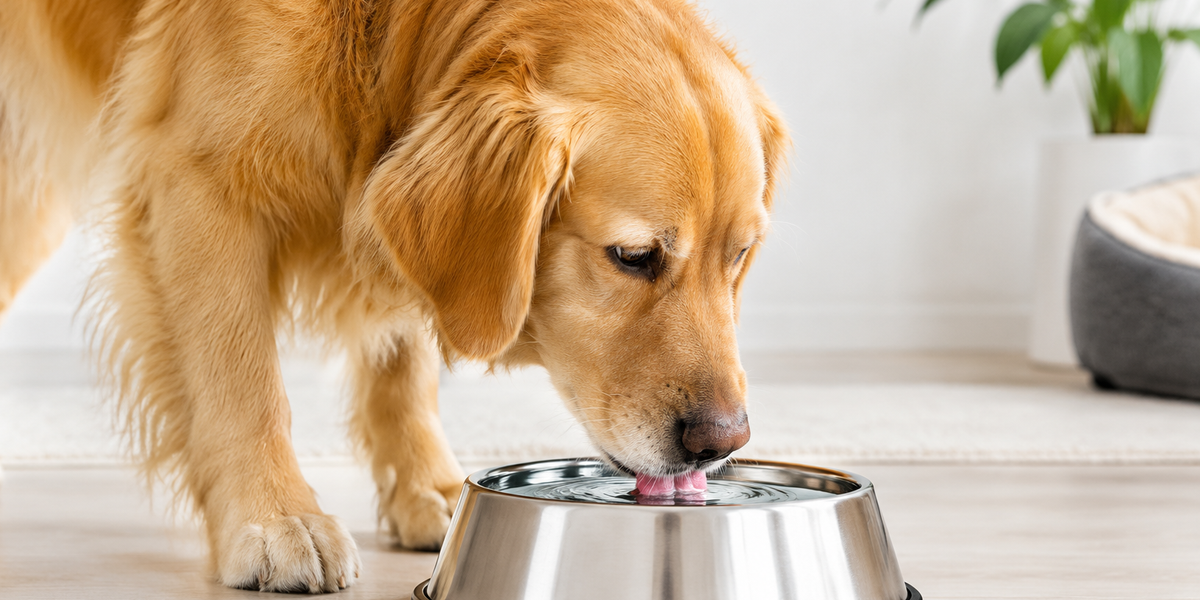
To measure intake accurately, use a bowl or fountain with clear volume markings. Fill it to a known level in the morning, top it off as needed throughout the day, and calculate the total at night. Repeat for several days to establish a pattern. If multiple pets share a bowl, separate them temporarily for accurate tracking.
When to See Your Vet Immediately
Some situations demand same-day or emergency care:
- Excessive thirst plus vomiting, diarrhea, or collapse
- Unspayed female dog drinking heavily after a recent heat cycle (possible pyometra)
- Yellowing gums or whites of eyes (liver disease or hemolytic anemia)
- Sudden onset in a young, previously healthy dog
- Inability to urinate despite drinking heavily (urinary blockage)
- Seizures, severe lethargy, or loss of consciousness
For less urgent but still concerning changes—gradual increase in thirst over a week, mild lethargy, slight weight loss—schedule a vet appointment within a few days. Early intervention improves outcomes for nearly all the conditions listed above.
Tracking Your Dog's Water Intake at Home
Accurate monitoring turns vague worry into actionable data. Here are three tools that make the job easier:
PetSafe Drinkwell Platinum Pet Fountain
| Criteria | Score |
|----------|-------|
| Capacity | 9/10 |
| Ease of Monitoring | 8/10 |
| Filtration Quality | 9/10 |
| Noise Level | 7/10 |
This 5-liter fountain uses a free-falling stream to encourage drinking, making it easier to spot sudden changes in consumption. The carbon filter removes impurities and improves taste, which can be especially helpful if your dog is finicky. The clear reservoir allows you to see the water level at a glance, and the large capacity means fewer refills—important when you're tracking daily intake over several days.
The adjustable flow control lets you dial in the right stream strength for your dog's preference, and the dual filtration (foam and carbon) keeps water fresher longer. Based on verified buyer reviews, most owners report their dogs drink more consistently from the fountain than from a static bowl.
✅ Pros:
- Free-falling stream encourages reluctant drinkers
- Large 5L capacity reduces daily refills
- Replaceable carbon filter improves water taste and quality
❌ Cons:
- Motor noise may bother noise-sensitive dogs
- Filters require replacement every 2–4 weeks
Neater Pets Adjustable Stainless Steel Dog Bowls
| Criteria | Score |
|----------|-------|
| Durability | 10/10 |
| Ease of Cleaning | 10/10 |
| Measurement Visibility | 6/10 |
| Adjustability | 9/10 |
If you prefer a simpler setup, this elevated stainless steel bowl offers straightforward monitoring without moving parts. The elevated design reduces neck strain for medium and large dogs, and the stainless steel construction is dishwasher-safe and won't harbor bacteria like plastic can.
While the bowl itself doesn't have measurement markings, the wide opening and consistent shape make it easy to use a measuring cup to track refills. The adjustable height (three settings) lets you customize the bowl position as your dog ages or if mobility issues develop. Buyer reviews consistently praise the bowl's durability and ease of cleaning.
✅ Pros:
- Stainless steel is hygienic and dishwasher-safe
- Elevated design reduces neck strain
- Adjustable height accommodates different dog sizes
❌ Cons:
- No built-in measurement markings
- Single bowl limits flexibility if you need separate water and food stations
UPSKY Dog Water Bowl No-Spill
| Criteria | Score |
|----------|-------|
| Capacity | 9/10 |
| Spill Prevention | 9/10 |
| Ease of Monitoring | 8/10 |
| Value | 10/10 |
This no-spill bowl uses a floating disk to slow drinking speed and prevent splashing, making it easier to keep floors dry while tracking intake. The 70-ounce capacity is generous for large dogs, and the transparent outer wall lets you see the water level without lifting the disk.
The floating disk also reduces the amount of dirt and debris that falls into the water, keeping it cleaner between refills. Based on buyer reviews, the design works well for messy drinkers and dogs who tend to splash. The budget-friendly price makes it an accessible option for monitoring water intake without a major investment.
✅ Pros:
- Floating disk slows gulping and prevents spills
- Large 70oz capacity suits big dogs
- Transparent walls make level-checking easy
❌ Cons:
- Floating disk needs regular cleaning to prevent buildup
- Not ideal for very small or toy breeds
💡 Pro Tip: Place a piece of painter's tape on the outside of any water bowl and mark the starting level each morning. At night, mark the new level after refilling. This low-tech method works with any bowl and gives you a quick visual record.
What Your Vet Will Do
When you bring your dog in for excessive thirst, expect a thorough workup. Your vet will start with a detailed history—when the increased drinking started, any other symptoms, diet changes, medications, and recent activities. They'll perform a physical exam, checking for signs of dehydration, abdominal pain, enlarged organs, or other abnormalities.
Bloodwork is nearly always the next step. A complete blood count (CBC) and chemistry panel reveal issues with kidneys, liver, blood sugar, electrolytes, and more. Urinalysis checks urine concentration, glucose, protein, bacteria, and other markers. Depending on initial findings, your vet may recommend additional tests: X-rays, ultrasound, hormone panels (for Cushing's or thyroid disease), or specialized kidney function tests.
The goal is to identify the underlying cause so treatment can begin promptly. Many of the conditions that cause polydipsia are manageable with medication, diet changes, or surgery, especially when caught early.
Diet and Hydration Tips While You Wait for Answers
If you're waiting for a vet appointment or test results, continue providing unlimited access to fresh water. Never restrict water to "fix" the excessive drinking—your dog is thirsty for a reason, and dehydration will only worsen the underlying problem.
Avoid high-sodium treats or foods, which can exacerbate thirst. Stick to your dog's regular diet unless your vet advises otherwise. If your dog is having accidents indoors due to increased urination, increase potty breaks and consider using washable pee pads as a temporary measure. Stay patient—your dog isn't being bad, they're responding to a physiological need.
If you've also noticed signs of discomfort or behavioral changes, our Recognizing Common Dog Allergies: Symptoms and Home Care Tips 2026 guide may help you identify additional symptoms that could inform your vet visit.
Frequently Asked Questions
Can hot weather cause my dog to drink more water?
Yes, absolutely. Dogs regulate body temperature through panting, which increases water loss. On hot days or after vigorous exercise, it's normal for your dog to drink significantly more. The concern arises when excessive thirst persists in moderate weather without increased activity, or when it's accompanied by other symptoms like lethargy or changes in urination.
How do I know if my dog's increased urination matches the increased drinking?
Most dogs with polydipsia also have polyuria (excessive urination)—the two go hand in hand. If your dog is drinking more but urinating the same amount, or drinking more and unable to urinate, contact your vet immediately. The latter could indicate a urinary blockage, which is a medical emergency.
Is it ever normal for a senior dog to drink more water?
While some senior dogs naturally drink a bit more due to decreased kidney concentration ability, a sudden or dramatic increase is not a normal part of aging. Senior dogs are at higher risk for kidney disease, diabetes, and Cushing's, so age makes the symptom more concerning, not less. Always have it evaluated.
Can dehydration cause a dog to drink excessively?
Dehydration causes increased thirst as the body tries to restore fluid balance, but it's usually a short-term response to an acute issue (vomiting, diarrhea, heat exposure). If your dog remains excessively thirsty after the acute issue resolves, an underlying problem may be present.
Should I limit my dog's water intake to stop the accidents?
No. Restricting water can lead to dangerous dehydration and worsen kidney function. The excessive drinking is your dog's body attempting to compensate for an underlying problem. Focus on getting a diagnosis and treating the root cause, not managing the symptom by limiting water.
Final Thoughts
Excessive thirst in dogs is never something to ignore. While it's tempting to chalk it up to warm weather or a long walk, sustained polydipsia is often the first visible sign of diabetes, kidney disease, Cushing's, or other serious conditions. The good news is that many of these conditions are highly manageable when caught early, and your vet has the tools to diagnose them quickly with a few simple tests.
Start by measuring your dog's water intake over several days using a fountain or bowl with clear volume indicators. Note any other symptoms—changes in urination, appetite, energy, or behavior. Then schedule a vet appointment and bring your log. Early intervention can make the difference between a minor medication adjustment and a critical health crisis.
If you notice excessive thirst plus any red-flag symptoms—vomiting, yellowing gums, collapse, or inability to urinate—don't wait. Head to your vet or an emergency clinic immediately. Your dog depends on you to recognize when something isn't right and act quickly.
Editor's Choice
If you need reliable tools to monitor your dog's hydration while you investigate the cause of their excessive thirst, we recommend starting with the PetSafe Drinkwell Platinum Pet Fountain. The free-falling stream encourages consistent drinking, the carbon filter keeps water fresh, and the 5-liter capacity makes tracking daily intake straightforward. For a no-fuss, budget-friendly option, the UPSKY Dog Water Bowl No-Spill offers generous capacity and easy monitoring at a fraction of the price. And if you prefer traditional stainless steel, the Neater Pets Adjustable Stainless Steel Dog Bowls combines durability with adjustable height for long-term use.