This post contains affiliate links. If you buy through them, we may earn a small commission at no extra cost to you. WoofPod only recommends gear we'd use with our own dogs.
⭐ Our Top Pick
🏆 Best Overall: PetSafe Clik-R Dog Training Clicker — A crisp, ergonomic clicker that gives you the precise marker timing positive reinforcement depends on, for the price of a coffee.
💰 Best Value: Zuke's Mini Naturals Dog Training Treats — Pea-sized, smelly, soft treats built for the dozens of rapid rewards a beginner session requires.
Introduction
Positive reinforcement training is the most researched, most recommended, and — frankly — most enjoyable way to teach a dog almost anything. Instead of correcting what you don't want, you reward what you do want, and the behavior grows. In 2026, the method is backed by decades of behavioral science and endorsed by organizations like the American Veterinary Society of Animal Behavior for everything from basic manners to reactivity work.
The catch is that "reward the good stuff" sounds simple but is easy to get subtly wrong. Timing, reward value, and session length all determine whether your dog learns quickly or just gets confused. This guide walks you through the mechanics — the marker, the reward, the schedule — so a total beginner can run a productive five-minute session tonight.
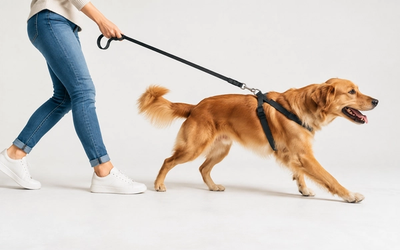
We put this together by comparing manufacturer specs, trainer-recommended tools, and thousands of verified buyer reviews on the gear that makes positive reinforcement easier. Whether you're teaching "sit" to a puppy or rebuilding focus with an adult rescue, the framework is the same. And if your dog's biggest issue is leash manners, our guide on how to stop a dog from pulling on the leash applies this method step by step.
What to Look For
- A marker that's fast and distinct. A clicker or a one-syllable word like "yes" marks the exact instant your dog does the right thing. The sound must be consistent and unlike anything else in your day.
- High-value, tiny treats. Rewards should be pea-sized so you can hand out 20+ per session without filling your dog up. Soft and smelly beats crunchy and bland for motivation.
- A reward pouch within reach. If you're digging in a pocket, your timing is already gone. A waist pouch keeps treats a half-second away.
- Low-distraction starting environments. Begin in your living room before you attempt the sidewalk. Difficulty should scale with your dog's success rate, not your ambition.
- A clear picture of the finished behavior. Know what "done" looks like — a sit that holds for five seconds, a recall that ends with a hand touch — before you start clicking.
- Session limits. Five to ten minutes, once or twice a day, beats a single exhausting hour. End every session on a win.
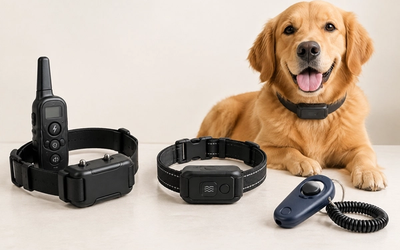
💡 Pro Tip: If you're also considering aversive tools out of frustration, it's worth understanding the trade-offs first — our breakdown of best dog training collars of 2026 covers e-collars, vibration, and clickers side by side.
Positive Reinforcement Training Gear We Recommend
PetSafe Clik-R Dog Training Clicker
| Criteria | Score |
|----------|-------|
| Click Clarity | 9/10 |
| Ergonomics | 9/10 |
| Durability | 8/10 |
| Value | 10/10 |
The Clik-R is the clicker most trainers hand to beginners, and the reason is timing. Its metal tongue produces a sharp, consistent click that carries across a room, and the finger loop lets you hold it ready without a death grip. Based on verified specs and buyer reviews, it's the cheapest upgrade you can make to your training accuracy — the click tells your dog "that exact thing, right there" before the treat ever arrives. The main complaint in reviews is volume: some sensitive dogs flinch at first, so introduce it by clicking-then-treating with no behavior attached.
✅ Pros:
- Crisp, loud click that's easy to time precisely
- Ergonomic loop keeps it ready in your hand
- Costs less than a bag of treats
❌ Cons:
- No volume control — sensitive dogs may startle initially
- Thin wrist strap wears with heavy use
Zuke's Mini Naturals Dog Training Treats
| Criteria | Score |
|----------|-------|
| Size for Repetition | 10/10 |
| Palatability | 9/10 |
| Ingredient Quality | 8/10 |
| Value | 8/10 |
Positive reinforcement lives and dies on repetition, and Zuke's Mini Naturals are sized for exactly that. Each piece is roughly pea-sized — small enough to reward 30 behaviors in a session without wrecking your dog's dinner — yet soft and strongly scented, which is what actually drives motivation. Buyer reviews consistently praise the texture and the range of flavors, though some note batch-to-batch softness varies and the per-ounce price is higher than bulk biscuits. For high-stakes training like recall, that trade-off is usually worth it.
✅ Pros:
- Pea-sized pieces ideal for rapid-fire rewarding
- Soft, aromatic, and highly motivating
- Multiple flavors for picky or sensitive dogs
❌ Cons:
- Pricier per ounce than bulk treats
- Softness can vary between batches
KONG Training Treats
| Criteria | Score |
|----------|-------|
| Size for Repetition | 9/10 |
| Palatability | 9/10 |
| Availability | 10/10 |
| Value | 9/10 |
KONG's training treats are the reliable middle ground: small, soft, and easy to break in half for even faster delivery. They're stocked almost everywhere, which matters when you run out mid-week, and verified reviews rate them highly for both puppy classes and adult obedience work. The formula does contain chicken and grains, so dogs with sensitivities should look elsewhere — and the bag's reseal isn't the tightest, so transfer to a pouch if you're tossing it in a training bag.
✅ Pros:
- Small and soft, easy to split for quick rewards
- Widely available and consistently reviewed
- Affordable for everyday sessions
❌ Cons:
- Contains chicken and grains
- Bag reseal is weak
Outward Hound Treat Pouch
| Criteria | Score |
|----------|-------|
| Access Speed | 9/10 |
| Capacity | 8/10 |
| Cleanability | 9/10 |
| Comfort | 8/10 |
A treat pouch sounds like an accessory until you realize it's a timing tool. The Outward Hound pouch sits on a waist belt with a wide magnetic opening, so your hand goes in and out without looking — which is the difference between marking a sit and missing it entirely. The wipe-clean lining handles greasy treats, and there's room for a clicker and bag rolls. Reviews flag two issues: the magnet can pop open during rough play, and the belt runs small for larger waists.
✅ Pros:
- Wide magnetic opening for one-handed access
- Wipe-clean lining resists odor
- Extra pockets for clicker, bags, and phone
❌ Cons:
- Magnetic closure can open during vigorous activity
- Belt sizing runs small
Karen Pryor Clicker Training Starter Kit
| Criteria | Score |
|----------|-------|
| Completeness | 9/10 |
| Educational Value | 9/10 |
| Build Quality | 7/10 |
| Value | 8/10 |
If you'd rather buy one box and start, this kit bundles a clicker, a target stick, and a short introductory guide from the trainer who popularized clicker work in the pet world. It's an excellent on-ramp for first-timers, and the guide covers the core mechanics clearly. The trade-offs are minor: the guide is brief (serious students will want a full book), and the target stick feels less sturdy than standalone options. As a starter set, though, it removes the guesswork.
✅ Pros:
- Everything needed to start in one box
- Authored by a foundational force-free trainer
- Good gift for new dog owners
❌ Cons:
- Guide is short
- Target stick feels flimsy
Frequently Asked Questions
Is positive reinforcement just bribery with treats?
No. Bribery happens before the behavior to coax it; reinforcement happens after the behavior to strengthen it. Once a behavior is reliable, you fade the treats to an unpredictable schedule and replace food with praise, play, and access to things your dog wants. The reward is information, not a payoff.
How long until my dog "gets it"?
Simple behaviors like sit or touch often click in three to five short sessions. Reliable responses around distractions take weeks of consistent, low-pressure practice. If progress stalls, shorten sessions and lower the difficulty rather than repeating harder reps.
Do I have to use a clicker?
No — a consistent marker word like "yes" works well. The clicker's advantage is that it sounds identical every time, which sharpens timing. Many trainers use both, clicking in learning phases and marking with a word once the behavior is fluent.
What if my dog won't take treats during training?
That usually means the environment is too distracting or the treat isn't valuable enough. Move to a quieter space, try a higher-value reward like freeze-dried liver, and keep sessions under five minutes. A dog who won't eat is a dog who's over threshold.
Can I use positive reinforcement for problem behaviors?
Yes — the method teaches incompatible behaviors. You don't reward the barking; you reward the quiet that follows it. For leash-specific problems, the same framework applies, and our step-by-step leash-pulling guide walks through it.
Final Thoughts
Positive reinforcement training isn't a philosophy you have to believe in — it's a mechanical process you can learn in an afternoon. Mark the behavior, reward it fast, repeat in short sessions, and raise difficulty only when your dog is winning. The tools are cheap: a clicker, a pouch, and treats your dog actually wants.
Start tonight with five minutes in the kitchen. Pick one behavior, load your clicker, and end on a success. Your dog will tell you by tomorrow whether you got the timing right.
Editor's Choice
- 🏆 Best Overall: PetSafe Clik-R Dog Training Clicker — the cheapest way to sharpen your timing and the tool most trainers recommend first.
- 💰 Best Value: Zuke's Mini Naturals Dog Training Treats — sized and scented for the rapid-fire rewarding beginners need.
- 🎒 Best Accessory: Outward Hound Treat Pouch — keeps rewards a half-second away so your marker timing stays honest.